Body-side I/O
Push-to-talk voice capture, speaker playback, haptics, and visible status.
Tuppo / Ceruvon OS / PAF-Lab
PAF-Lab is a private build line for a small wearable terminal that can listen, speak, and show state. The device stays thin: voice I/O and status live on the body, while intelligence runs through a phone or local relay plus cloud models.
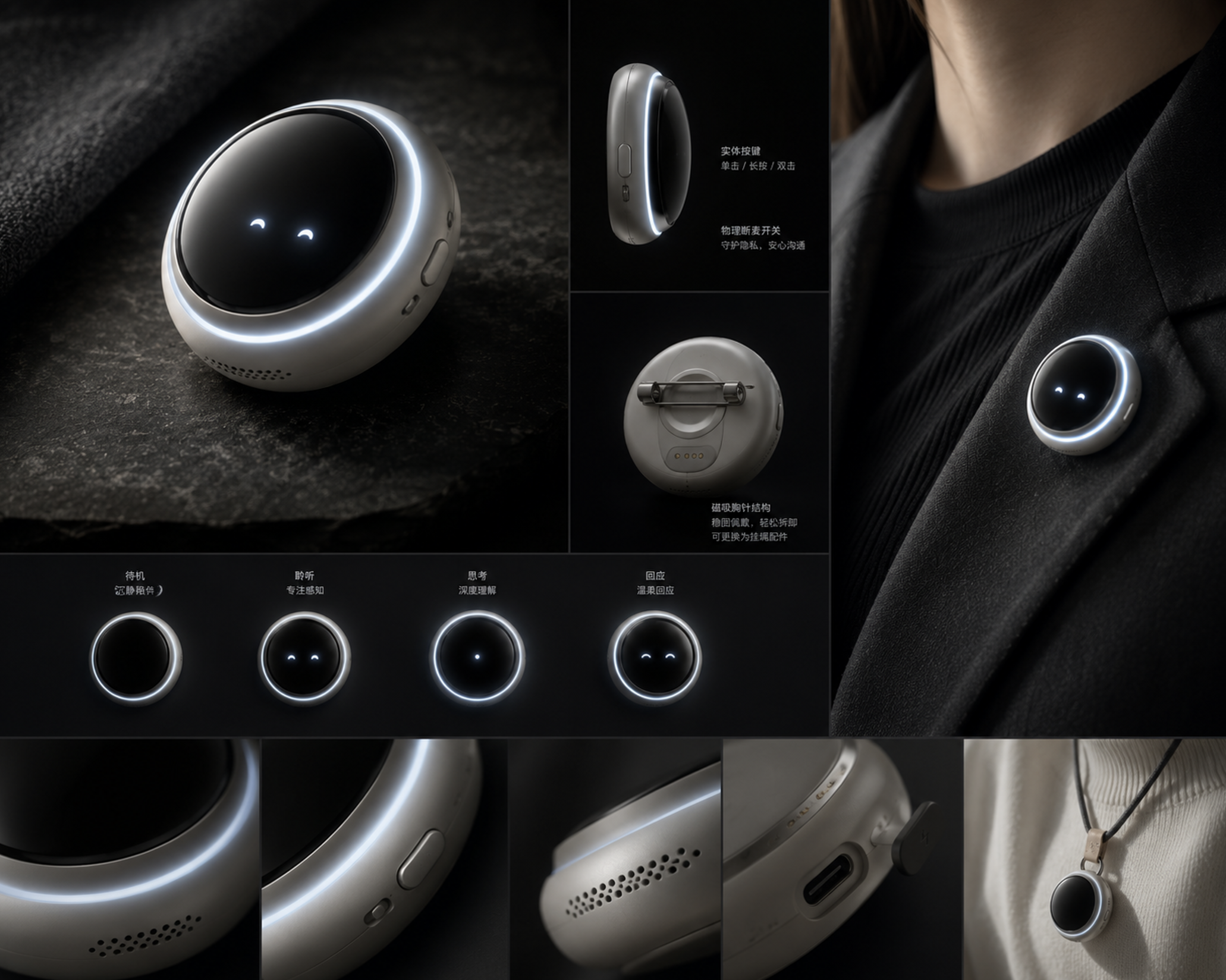
PAF-Lab treats the wearable node as a slim endpoint: microphone, speaker, screen, vibration, physical mute, and state lights. The heavier work sits in the relay layer: ASR, model routing, memory, TTS, and confirmation gates.
Push-to-talk voice capture, speaker playback, haptics, and visible status.
A phone or local Mac relay handles speech, model access, memory, and routing.
Physical mute and pre-wake local behavior keep the privacy boundary legible.
The first prototype uses ESP32-S3, I2S microphone, MAX98357A speaker output, GC9A01 round display, WS2812 status lights, DRV2605L haptics, and a physical microphone power switch. The consumer path points toward phone-as-gateway; local relay remains the developer mode.
Hardware architecture, procurement list, relay skeleton, and collaboration roles.
Wearable hardware concept render and campaign-language skeleton collected.
Brand hierarchy settled: Tuppo as parent, Ceruvon OS as system layer, PAF-Lab as build line.
Decision ledger and collaboration protocol added to keep public claims and build state aligned.